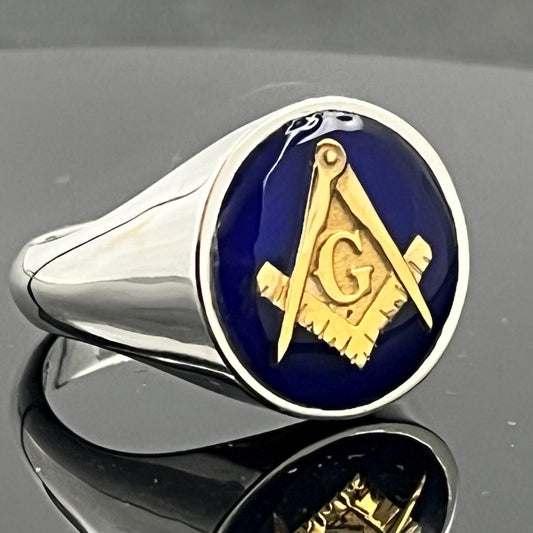
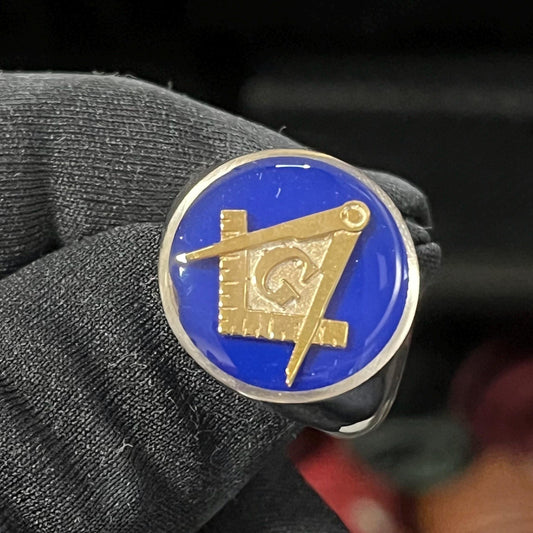
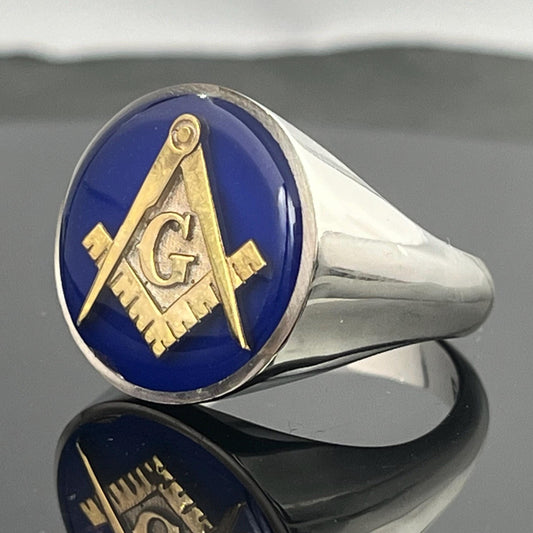
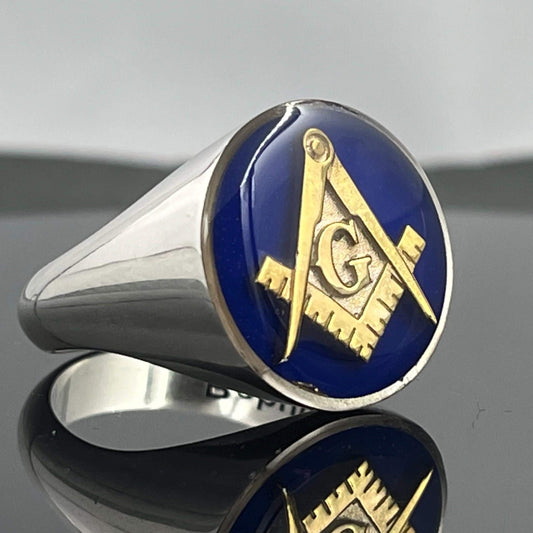
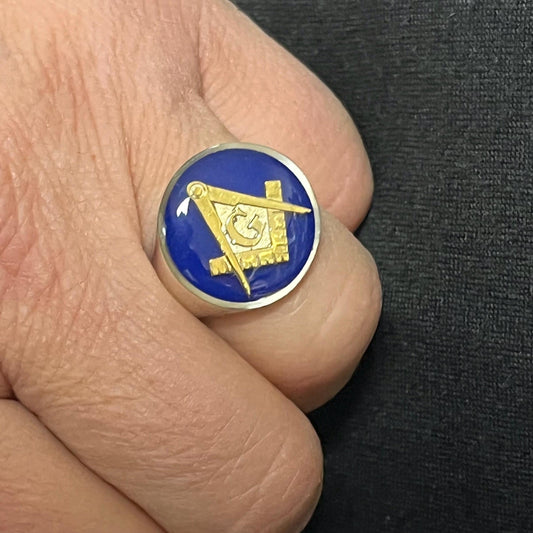
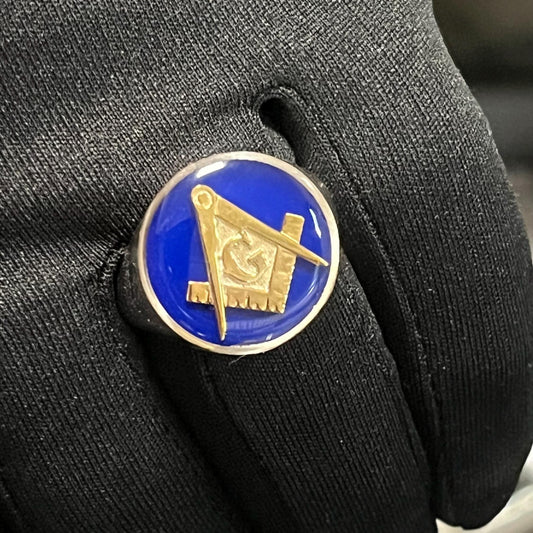
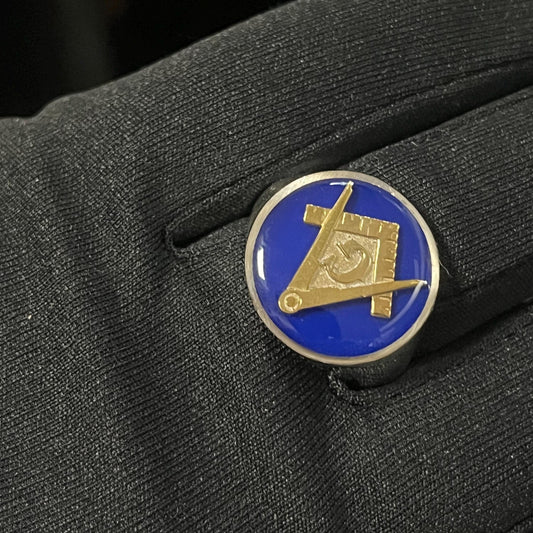
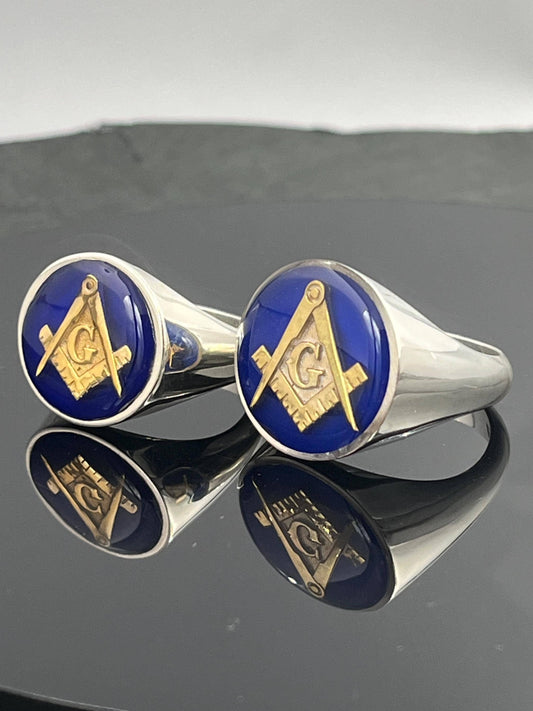
Masonic jewelry has one job that most jewelry doesn't: it has to mean something specific to the person wearing it, and read as unmistakable to anyone else who shares that meaning. That's a different design brief than "look nice," and it's why the same handful of symbols — the square and compass chief among them — have stayed essentially unchanged for centuries.
If you're buying your first piece, or buying one as a gift for someone in the Craft, here's what the symbols actually mean and how to choose a piece that gets the details right.
The square and compass
The square and compass is the most recognized symbol in Freemasonry — two tools laid across each other, sometimes with a "G" at the center representing Geometry, or God, depending on the jurisdiction and tradition. The square represents morality and honest dealing; the compass represents self-restraint and the boundaries a Mason keeps for himself. Together, they're a working tool turned moral instruction, which is the pattern behind nearly every Masonic symbol.

Our Square & Compass necklace sets the symbol in deep blue enamel — blue being the color most associated with Craft (Blue Lodge) Freemasonry specifically, as opposed to the red more common in Scottish Rite pieces.
The Scottish Rite eye and the Templar cross
Two other symbols show up constantly in Masonic jewelry, and it's worth knowing the difference:
- The all-seeing eye — a symbol of watchfulness and divine providence, usually shown radiating light. You'll see it worked into rings and pendants associated with the Scottish Rite specifically.
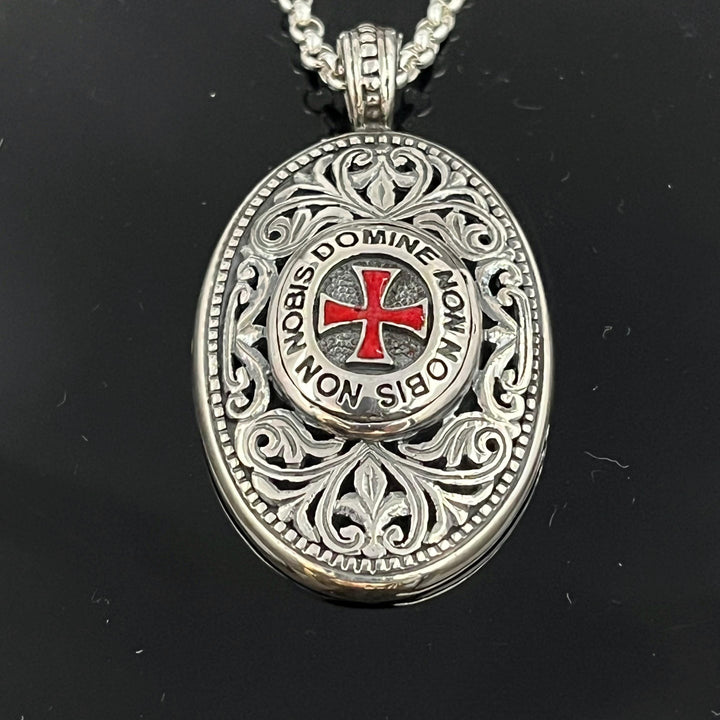
- The Templar cross — Masonic Templar-affiliated bodies (like the York Rite's Knights Templar degree) use the cross of the historical Knights Templar as their own symbol, usually paired with a fleur-de-lis or a Masonic emblem so it reads as Masonic rather than purely historical.

Our Masonic Templar Cross Ring combines both traditions into one lodge chevalier — a heavier, signet-style band that leaves room inside for initials or a name to be engraved, which is a common way Masons personalize a ring for a specific milestone or degree.
Choosing a piece: ring, pendant, or lapel pin
The three most common formats each carry a slightly different weight:
- Rings are the most visible, everyday choice — a solid chevalier ring reads as a serious, permanent piece rather than a passing accessory.
- Pendants and necklaces tend to be worn more privately, under a collar — a personal reminder rather than a public signal.
- Lapel pins are the traditional choice for lodge meetings and formal wear, small enough to be discreet but unmistakable to anyone who recognizes the symbol.
If you're buying for someone else and you're not sure of their rite or degree, a plain square-and-compass piece is always the safe, universally recognized choice — the more specific symbols (the eye, the Templar cross, degree-specific numerals) are best chosen by the Mason themselves, or with their input.
Every piece is handmade to order in sterling silver in our Athens workshop, and most can be finished in oxidized black, polished silver, or gold plate. If you'd like a piece personalized with initials, a lodge number, or a specific finish, message us before ordering — we build most Masonic pieces to the wearer's exact specification.